









Home > Courses > IT & Digital > Cyber Security Courses
Cyber Security Courses
Build practical cyber security awareness with JCI’s cyber security courses in Singapore. These courses are designed for beginners, working professionals and teams who want to understand common cyber threats, protect sensitive information and respond more confidently to digital risks.
Learners can explore topics such as phishing, malware, password security, data protection, device security and cyber incident reporting, with training focused on real workplace situations.
By Categories/ Courses Level
Common Areas Covered in Our Cybersecurity Courses
Our cybersecurity courses cover practical topics that help learners recognise and manage common digital risks. Key areas may include information and cyber security, phishing, malware, identity theft, online scams, computer hacking, password security, device protection, data security and cyber incident reporting.
Learners may also understand how organisations approach cybersecurity and how employees can play an active role in reducing security risks. These topics are useful for both IT and non-IT professionals who handle digital tools, business systems or sensitive information at work.
Importance of Cybersecurity Skills in Singapore
Having a basic cybersecurity skillset is becoming increasingly important in Singapore as more organisations rely on digital systems, online platforms and cloud-based tools. A single mistake, such as clicking a phishing link or using weak passwords, can expose confidential business data and disrupt operations.
By learning cybersecurity fundamentals, professionals can better identify threats, follow safer digital practices and facilitate a more secure workplace. Cybersecurity awareness is especially useful for employees who regularly manage confidential emails, customer data, financial information, internal documents, company devices, and most importantly, work heavily with AI
Why Choose James Cook Institute
James Cook Institute offers practical WSQ registered courses that help learners stand out with workplace-ready skills. JCI’s cybersecurity training includes topics such as cyber safety, security awareness, data protection and risk identification, with learning designed around real workplace needs.
Learners can also explore related digital courses in data analytics, AI courses, Excel and other IT areas to build broader digital capability. Eligible learners and organisations may review available funding or certification details based on the selected course.
Quick Answers About Our Cybersecurity Courses
Are Cybersecurity Skills in Demand?
Yes, cybersecurity skills are in demand as businesses continue to use more digital tools, online systems and cloud platforms. Even basic cybersecurity awareness is valuable because employees across many departments handle emails, files, passwords, devices and customer information. Learning how to recognise cyber risks can help reduce mistakes and support safer workplace practices.
Are cybersecurity courses important for non-IT professionals?
Yes, cybersecurity courses are important for non-IT professionals because many cyber incidents begin with everyday actions such as opening emails, clicking links, downloading files or sharing information. A practical cybersecurity course can help non-IT learners identify phishing attempts, protect passwords, secure devices and report suspicious activity correctly.
Do your cybersecurity courses provide certifications?
JCI offers cybersecurity-related courses that may be WSQ-certified or have funding options depending on the specific course selected. Learners should review the individual course page or contact JCI directly to confirm the latest course certification, funding eligibility and enrolment details.
Recommended Courses
Frequently Asked Questions
Here are our answers to commonly asked questions.
Are there any subsidies or funding options for this course?
- You may be eligible for up to 70% SkillsFuture funding support, depending on factors such as your age, citizenship, and whether you’re applying as an individual or through your company. Please refer to the tables below for full details:
INDIVIDUAL

Individual Support
*Singaporeans 25 years old and above can use their eligible SkillsFuture Credits to offset remaining course fees (T&Cs apply).
CORPORATE
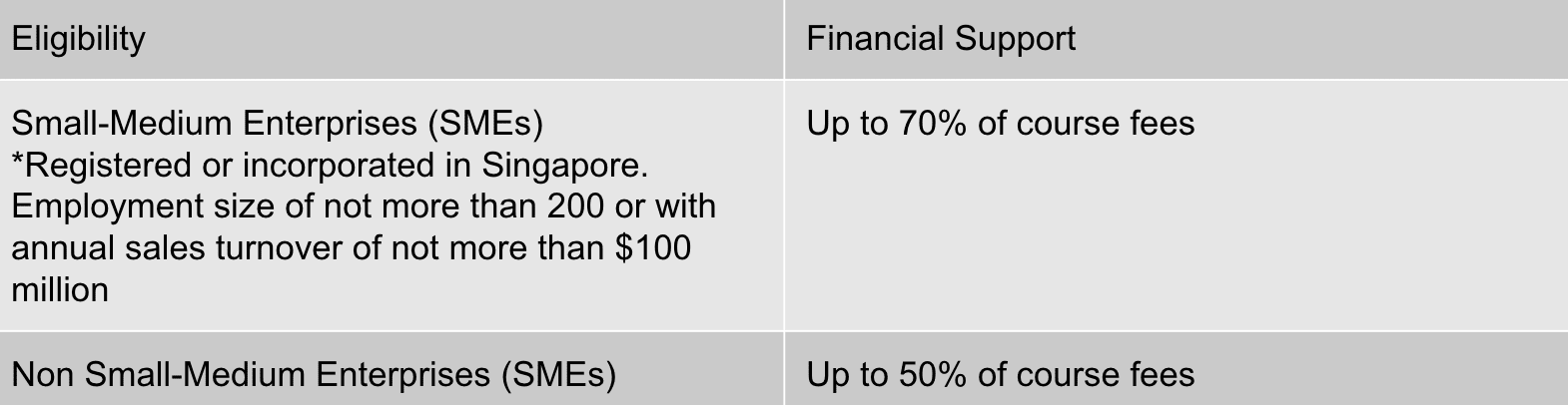
Corporate Support
*Companies with eligible SkillsFuture Enterprise Credit (SFEC) can receive up to 90% additional subsidy to offset the remaining fees (T&Cs apply).
**Additional Support via Absentee Payroll: $90 (Claimable up to $4.50 per hour, capped at $100,000 per enterprise per calendar year).
Can I use my SkillsFuture Credits to cover the remaining course fees after SkillsFuture funding has been applied?
- Singaporeans aged 25 and above can use their SkillsFuture Credits to offset the remaining course fees after SkillsFuture funding is applied. To check your available credit balance, simply log in to MySkillsFuture.
What is Absentee Payroll Funding
- The grant serves as reimbursement for employers who send their employees for training courses funded by Skills and Workforce Development Agency (SWDA) during regular working hours. Additionally, it also provides compensation to employers for training conducted outside of working hours, covering the anticipated overtime pay that would have been necessary for employees. The funding is eligible for claims up to $4.50 per hour, with a maximum cap of $100,000 per enterprise per calendar year.
In order to be eligible, organisations must meet the following criteria:
- Organisations must be registered or incorporated in Singapore
- Eligibility extends to non-business entities like Voluntary Welfare Organisations (VWOs) and societies, even if they are not registered with ACRA
- Sole proprietorships which meet all the above criteria are also eligible.
Submit and manage Absentee Payroll claims here.
What is SkillsFuture Enterprise Credit
- The SkillsFuture Enterprise Credit (SFEC) incentivises employers to invest in enterprise transformation and commit to enhancing their workforce’s skills. Eligible employers can obtain a single credit of $10,000 which can be used to cover up to 90% of out-of-pocket expenses on eligible costs or SFEC-supported training programs.

What is the Post Secondary Education Account (PSEA)
- PSEA funds are available for Singaporean Citizens to cover the approved fees and charges related to WSQ programs. The PSEA account will be closed in the year the account holder reaches 31 years of age, and any remaining funds in the PSEA will be transferred to the account holder’s CPF.
- To check your PSEA account balance, call the 24-hour automated Edusave/PSEA hotline at 6260 0777 and input your NRIC number.
What is UTAP funding?
- UTAP is a training benefit for NTUC members to defray their cost of training. This benefit is to encourage more NTUC members to go for skills upgrading.
- All NTUC members can apply for UTAP. However, the following criteria must be met to be eligible for UTAP:
- Paid-up NTUC membership before course commenced, throughout whole course duration and at the point of claim
- Course by training provider must be supported under UTAP, and training must commence within the supported period
- Course must not be fully funded through company sponsorship or other types of funding
- Unfunded course fee must be S$20 and above
- You must achieve a minimum of 75% attendance for each application and sat for all prescribed examination(s), if any
- UTAP application must be submitted within 6 months after course completion
- Unfunded course fee refers to the balance course fee payable after applicable government subsidy. This excludes GST, registration fees, misc. fees etc.
Get In Touch With Us!
Leave us a message
By submitting your personal information, you expressly allow James Cook Institute to contact you for marketing and promotional purposes. For more information on our data privacy notification, please visit here